
Managing large volumes of data in the context of AI and machine learning applications presents challenges related to data quality, data preparation, and automation. The requirements of data management are changing with the advent of generative AI, requiring more flexibility and the ability to handle larger volumes of data. Pimcore leverages AI and machine learning to automate data utilization and improve data intelligence.
By streamlining data management and integrating various data sources, Pimcore drives revenue growth for its customers. The platform combines data management and experience management to deliver personalized data across communication channels. Pimcore’s MDM solution addresses the challenges of integrating data for both human and machine consumption. The choice between physical and virtual MDM hubs depends on the use case and industry.
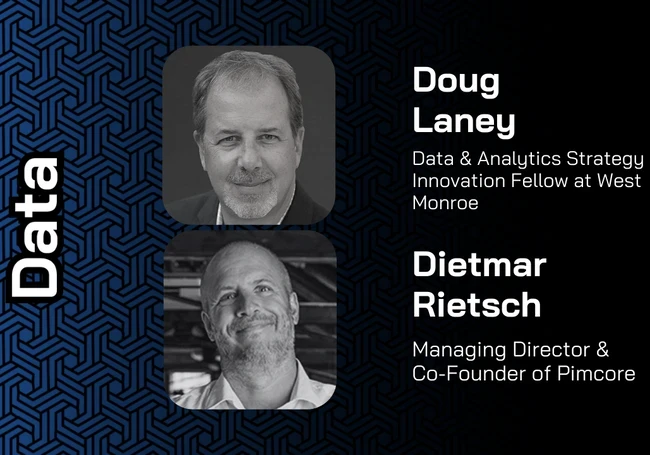
In this episode of the EM360 Podcast, Doug Laney, Data and Analytics Strategy Innovation Fellow at West Monroe speaks to Dietmar Rietsch, Managing Director and Co-Founder of Pimcore, to discuss:
- Data management
- AI
- Machine learning
- Data quality

Pimcore is an analyst-ranked IT company that provides innovative data and experience management solutions. The company was founded in 2013 and is headquartered in Salzburg, Austria. More than 110,000 customers, including Fortune 100 companies such as Pepsi, Sony, and Audi, already rely on Pimcore. The Pimcore Platform aggregates, enriches, and manages enterprise data, providing customers with up-to-date, consistent, and personalized experiences. Its Digital Asset Management (DAM), Product Information Management (PIM), Master Data Management (MDM), Digital Experience Management (DXP/CMS), and Digital Commerce modules are recognized by analysts such as Gartner and Forrester. The consolidated platform provides companies with a "trusted view" of information (products, assets, and customers) to eliminate data silos, optimize operational efficiency, improve customer experience, and minimize IT costs.



Comments ( 0 )